The Moral Meaning of Work, Part I
What the moral meaning of children can teach us about why we work
To explain and defend the Catholic theory of revealed Truth, moral and dogmatic, as it has been left to us by the Apostles and defined by the Church.
PUBLISHED BY THE JAMES CARDINAL GIBBONS INSTITUTE FOR HUMAN ECOLOGY · FOUNDED 1876
Or subscribe directly at americancatholicquarterly.com
The American Catholic Quarterly Review published its first issue in January 1876, in the centenary year of the nation’s founding. Its Salutatory declared that the Review would be Catholic and American, and set a second aim alongside the defense of doctrine: to show “the practical development and working of Catholic principle in the history of the world, in the lives of great and good men, and in the destinies of nations.”
At its founding the Review understood itself as the successor to Orestes Brownson’s Quarterly Review, which for three decades had been the premier national journal of opinion for Catholics. Failing health forced Brownson to give up publishing in October 1875. He wrote one last essay before his death the following April, and “The Philosophy of the Supernatural” appeared in the inaugural issue of the American Catholic Quarterly Review. The Review went on to publish forty-eight full volumes, ceasing publication after its January issue in 1924.
If you are a Catholic, perhaps you have a sense that there was once a serious and broad community of educated Catholics who engaged together in reflection at a high level, much to the benefit of the country. That community produced the Catholic Encyclopedia of 1907–1914, which more than a hundred years later has still not been superseded. Dip into the pages of the old Review and your sense will be amply confirmed. You would certainly attain the conviction: they were builders then, and we seem to be in ruins. One rebuilds with whatever tools are to hand. But one must have the intention to rebuild.
Our goal is to revive the Review. We shall do so with the means currently available to us, and in the manner most appropriate for publication in our own day. Quarterly reviews are no longer standard, and Substack suits a start-up that is also an upstart. Whether we move toward a print publication, and whether subscribers might receive a quarterly collection of our best work, we keep as open questions.
The American Catholic Quarterly Review aims to be the journal of record for American Catholic intellectual life.
We seek work that occupies a middle position between popular and specialist writing. Examples would be a well-developed Thomistic Institute lecture, a substantive homily, a thoughtful commencement address, or an essay that distills the central argument of a more technical work (a law review article, for instance) into a form accessible to the general readers among our subscribers, so that they may engage it with profit.
All published essays will be written in a high register and marked by exemplary politeness and civility. Contributions should be politically non-partisan. They may take positions on, and argue strongly for, any matter of free opinion, but such arguments should at least implicitly acknowledge that others may reasonably disagree.
We accept essays from 750 words to 5,000 words or more. Longer essays are typically serialized across issues, in consultation with the author.
We consider only essays submitted to the Review alone. An essay offered simultaneously to another publication will not be considered. While an essay is under consideration, the author should not offer it elsewhere.
We aim to reply within two weeks. An author who has not heard from us by then is free to withdraw the essay and submit it elsewhere.
Essays must not have appeared previously in print or online, including on a personal website, a Substack, or a social-media account. A lecture, homily, or address as delivered is not prior publication; but please tell us where it was given and whether a recording or transcript has been posted. We welcome essays which are fuller executions of ideas that have been sketched or tested out elsewhere.
Copyright remains with the author. We ask for first publication rights in the Review, and for exclusive rights for six months after publication. Thereafter the author may republish the essay elsewhere, with an acknowledgment of its first appearance in the American Catholic Quarterly Review.
Send your essay as a Word (.docx) or other text document to the Editor-in-Chief, Michael Pakaluk, at pakaluk@cua.edu. Please include a brief cover note, a two-sentence author biography, and the word count. Contributors whom the Editor has invited to write need not follow this procedure.
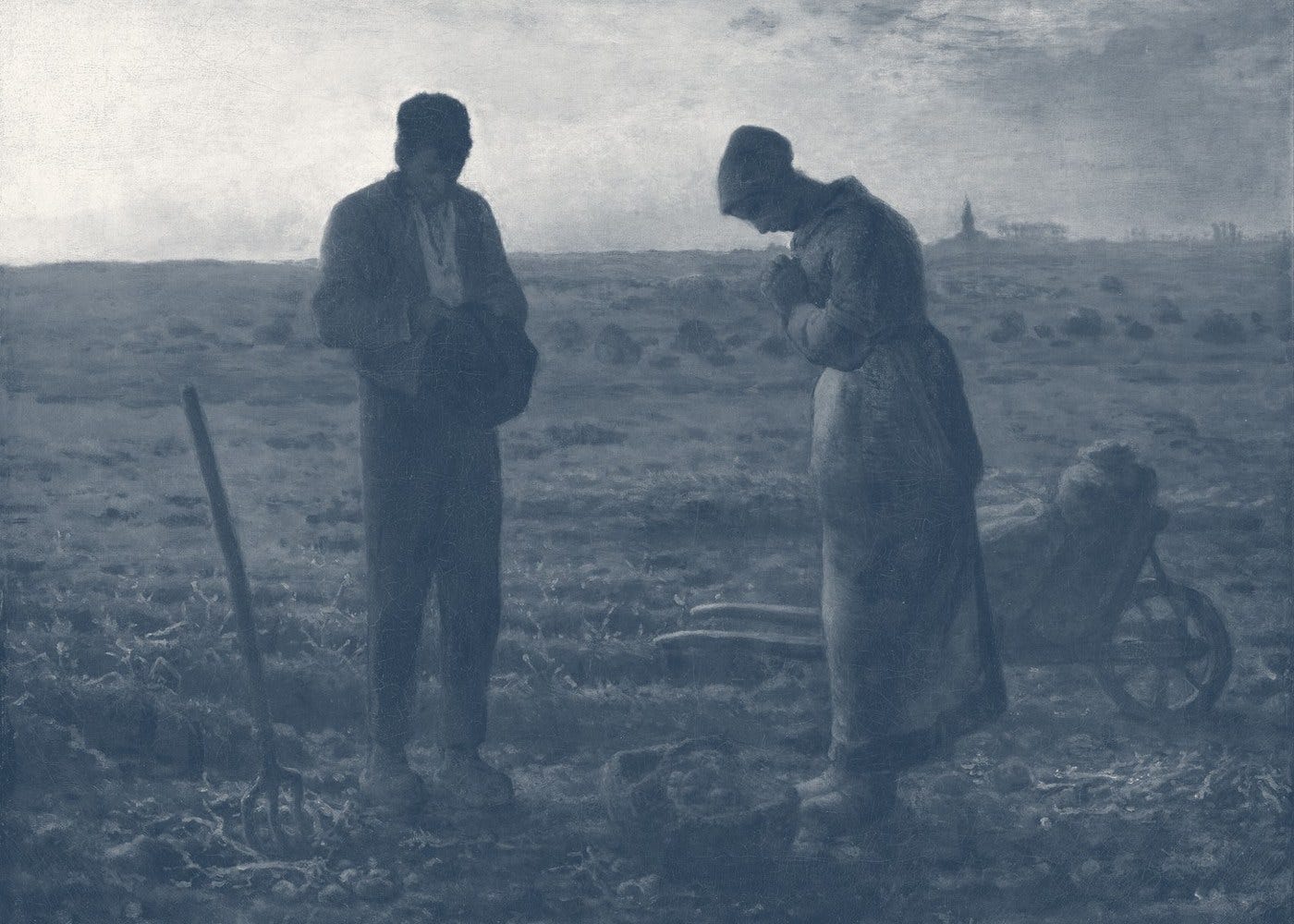
Read the latest essays at americancatholicquarterly.com

What the moral meaning of children can teach us about why we work

Assisi becomes the capital of Christian art: Giunta, Cimabue, Giotto, Fra Angelico, and the basilica itself. From our nu...

The poet of Assisi, and the asceticism and love of nature from which a school of art was born. From our number of Januar...

The Christlike love of the world. From our number of October 1900.

Nature and grace, and the conversion of Francis. From our number of October 1900.

The primitive legends, and the first friars. From the archives of the Review, October 1900.
Pledges support the Review. Gifts to the Institute support the whole of our work.
Editor-in-Chief | Distinguished Senior Fellow, The James Cardinal Gibbons Institute for Human Ecology
Associate Editor | Associate Professor of Historical and Systematic Theology, The Catholic University of America
Associate Editor | Associate Professor of Philosophy, The Catholic University of America
Associate Editor | Associate Professor of Church History and Associate Dean in Theology and Religious Studies, The Catholic University of America
Associate Editor | Associate Professor of Moral Theology/Ethics and the Grace P. Hobelman Chair in Catholic Moral Theology
The James Cardinal Gibbons Institute for Human Ecology, The Catholic University of America.
Contact us at gibbonsinstitute@cua.edu